

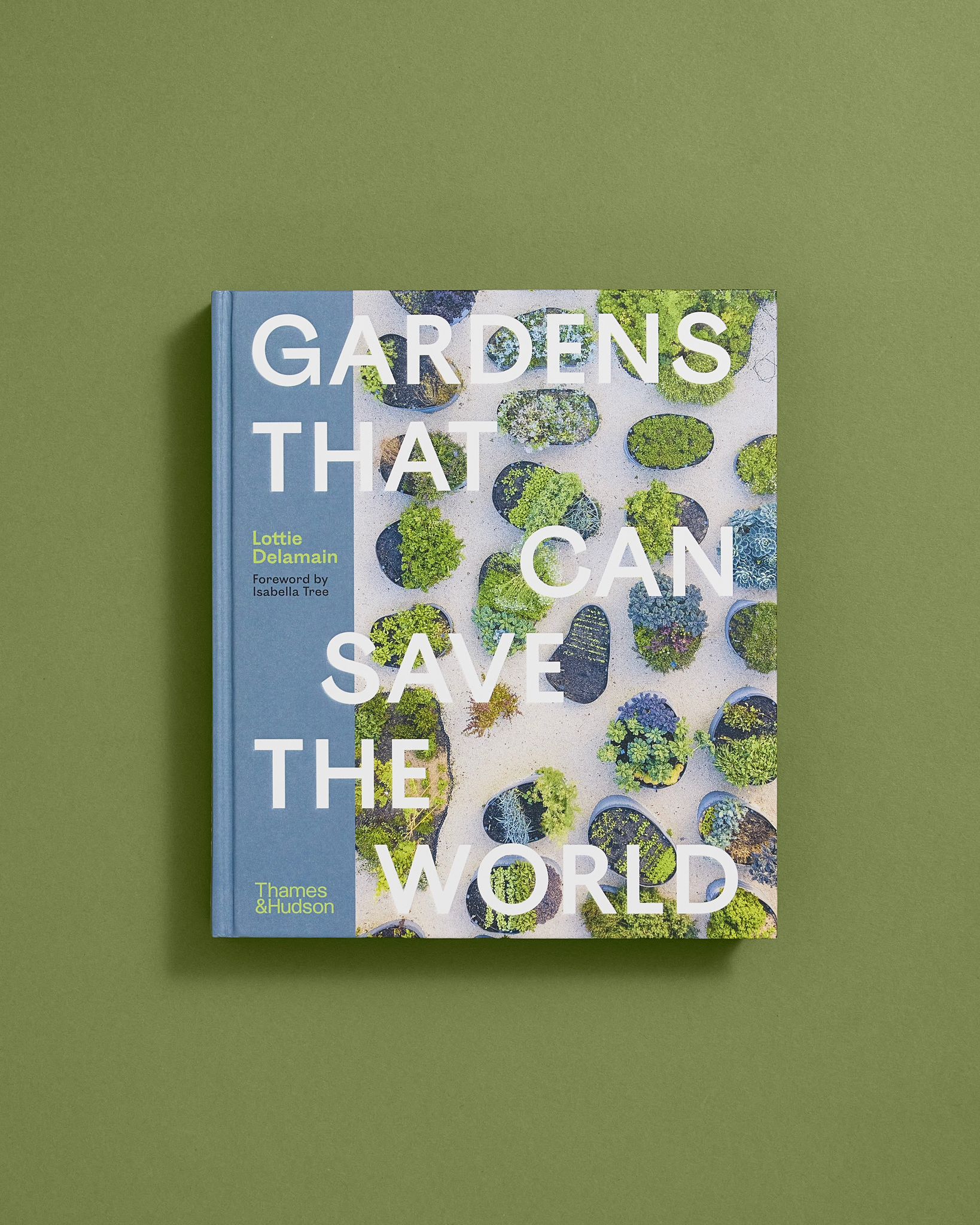
Gardens and green spaces are at the vanguard of positive change. They are modern-day crucibles for ideas and innovation that are providing solutions to some of our most persistent problems, whether loneliness or illness, flooding or drought. Around the world, green-fingered thinkers and pioneering plants-people are harnessing the power of the wild to quietly find small-scale strategies to reverse these ills.
It’s no longer just about aesthetics, but about what the great outdoors can do – save water, transform mental health, bridge social divides, educate vulnerable children, reimagine polluting industries and provide much reason for optimism in a rapidly changing world. Celebrating both the garden and gardener as integral players in a healthier future this book presents a series of strategies that will help the reader reevaluate the potential that lies in green spaces near them by looking at how they have been applied in gardens around the world.
Sixty-five projects demonstrate how gardens can repair, heal, empower, nourish and reimagine, whilst an easy-to-read coloured code links each project to others in the book that solve a similar problem, whether soil health, education or pollution. Profiles of ten Green Thinkers dotted throughout delve more deeply into the inspiring work that these pioneers are leading. A glossary of plants, materials and techniques at the back of book encourages readers to apply the lessons learnt in their own garden, be that a windowsill or an acre.
It’s no longer just about aesthetics, but about what the great outdoors can do – save water, transform mental health, bridge social divides, educate vulnerable children, reimagine polluting industries and provide much reason for optimism in a rapidly changing world. Celebrating both the garden and gardener as integral players in a healthier future this book presents a series of strategies that will help the reader reevaluate the potential that lies in green spaces near them by looking at how they have been applied in gardens around the world.
Sixty-five projects demonstrate how gardens can repair, heal, empower, nourish and reimagine, whilst an easy-to-read coloured code links each project to others in the book that solve a similar problem, whether soil health, education or pollution. Profiles of ten Green Thinkers dotted throughout delve more deeply into the inspiring work that these pioneers are leading. A glossary of plants, materials and techniques at the back of book encourages readers to apply the lessons learnt in their own garden, be that a windowsill or an acre.

Lottie Delamain
DirectorLottie started working life in textile design and spent six years living and working in South-East Asia working in fashion and homewares. On returning to the UK, Lottie retrained in Garden Design at the Inchbald School of Design, graduating with Distinction. Since then she has been working on gardens around the UK, from small urban spaces to historic estates and commercial developments.
Lottie is passionate about connecting people to the natural world and the underrated story-telling power of gardens. In May 2022, Lottie completed her first show garden at RHS Chelsea, A Textile Garden for Fashion Revolution.
She has been featured widely in the press, talks and chairs panels on gardens and design, and regularly writes for House & Garden. Lottie is a big advocate for the power of gardens to enrich our lives, and is a trustee of We Are Grow a charity working with schools & communities delivering programmes in sustainable food growing & outdoor learning. Her first book, published by Thames & Hudson is out in Spring 2026.
Lottie is passionate about connecting people to the natural world and the underrated story-telling power of gardens. In May 2022, Lottie completed her first show garden at RHS Chelsea, A Textile Garden for Fashion Revolution.
She has been featured widely in the press, talks and chairs panels on gardens and design, and regularly writes for House & Garden. Lottie is a big advocate for the power of gardens to enrich our lives, and is a trustee of We Are Grow a charity working with schools & communities delivering programmes in sustainable food growing & outdoor learning. Her first book, published by Thames & Hudson is out in Spring 2026.
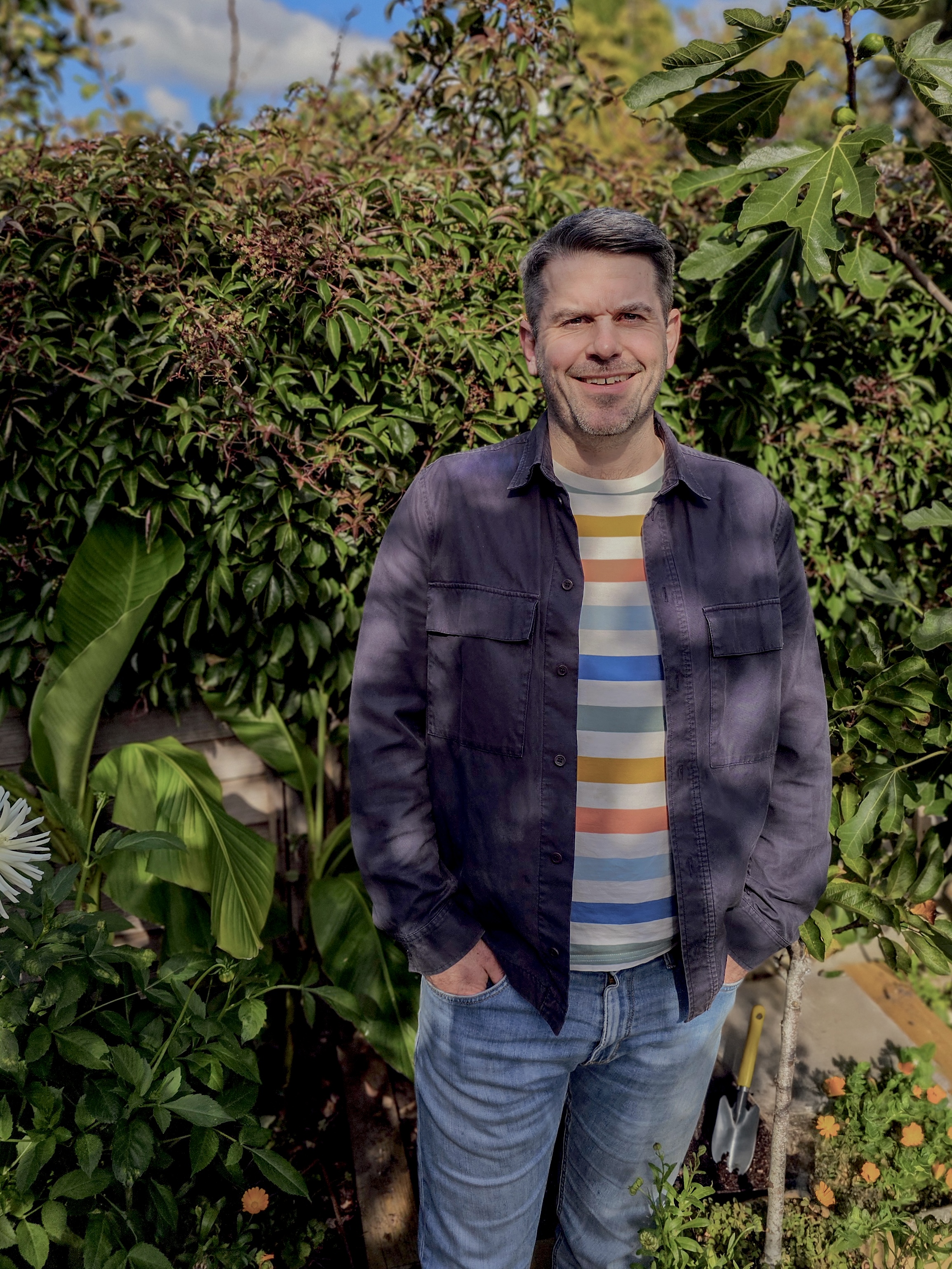
Ben Brace
Landscape Architect CMLIBen is a Chartered Landscape Architect, Project Manager and Horticulturalist with 18 years experience across a range of projects and scales.
He spent several years at the Royal Horticultural Society playing a major role in delivering the Key Investment Projects, most notably at RHS Garden Bridgewater. More recently he has worked on the delivery of high end, complex landscapes, with a focus on commercial development projects throughout London.
A self-confessed plant nerd, Ben is a champion of community green spaces, Ben loves the challenge of integrating green infrastructure into urban sites and enabling equitable access for all.
He spent several years at the Royal Horticultural Society playing a major role in delivering the Key Investment Projects, most notably at RHS Garden Bridgewater. More recently he has worked on the delivery of high end, complex landscapes, with a focus on commercial development projects throughout London.
A self-confessed plant nerd, Ben is a champion of community green spaces, Ben loves the challenge of integrating green infrastructure into urban sites and enabling equitable access for all.
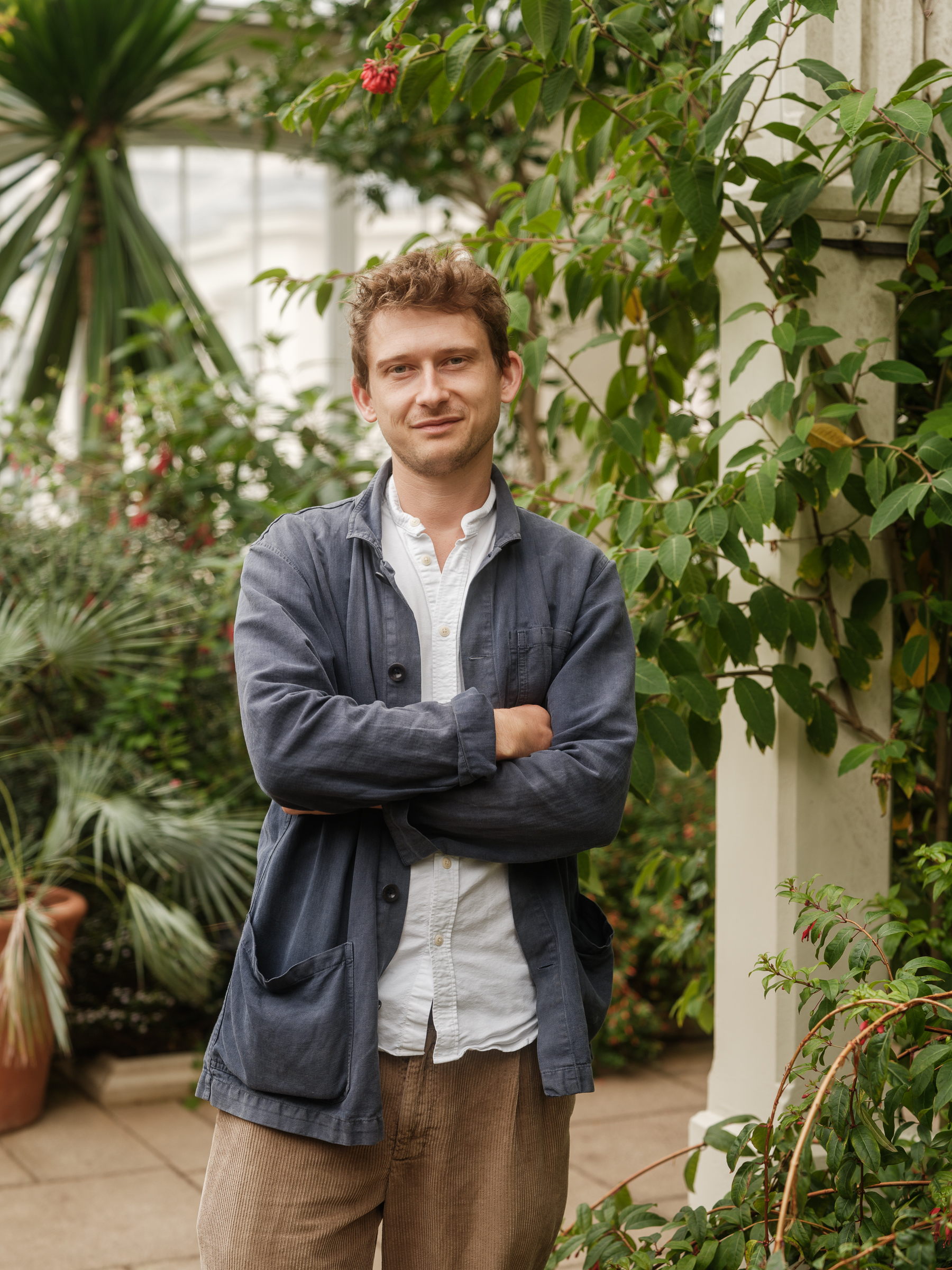
Fred Tiffin
Garden DesignerFred came to garden design from a career as a documentary producer working all over the world in news, current affairs and sport. He retrained at the
London College of Garden Design at Kew, graduating with a distinction and then began his career at Cameron Gardens before joining the studio in 2024.
He is an avid gardener, passionate plantsman and devout believer in the capacity of nature to cure the soul. He learnt his love of romantic, naturalistic gardens from his father’s rose collection and has a gimlet eye for good design. Today his designs draw on many years of travelling, having visited over 70 countries and counting. When he’s not in the garden with his dog Olive, he might well be found at Stamford Bridge supporting his other love Chelsea.
He is an avid gardener, passionate plantsman and devout believer in the capacity of nature to cure the soul. He learnt his love of romantic, naturalistic gardens from his father’s rose collection and has a gimlet eye for good design. Today his designs draw on many years of travelling, having visited over 70 countries and counting. When he’s not in the garden with his dog Olive, he might well be found at Stamford Bridge supporting his other love Chelsea.
A garden to celebrate the glorious global history of plants and textiles

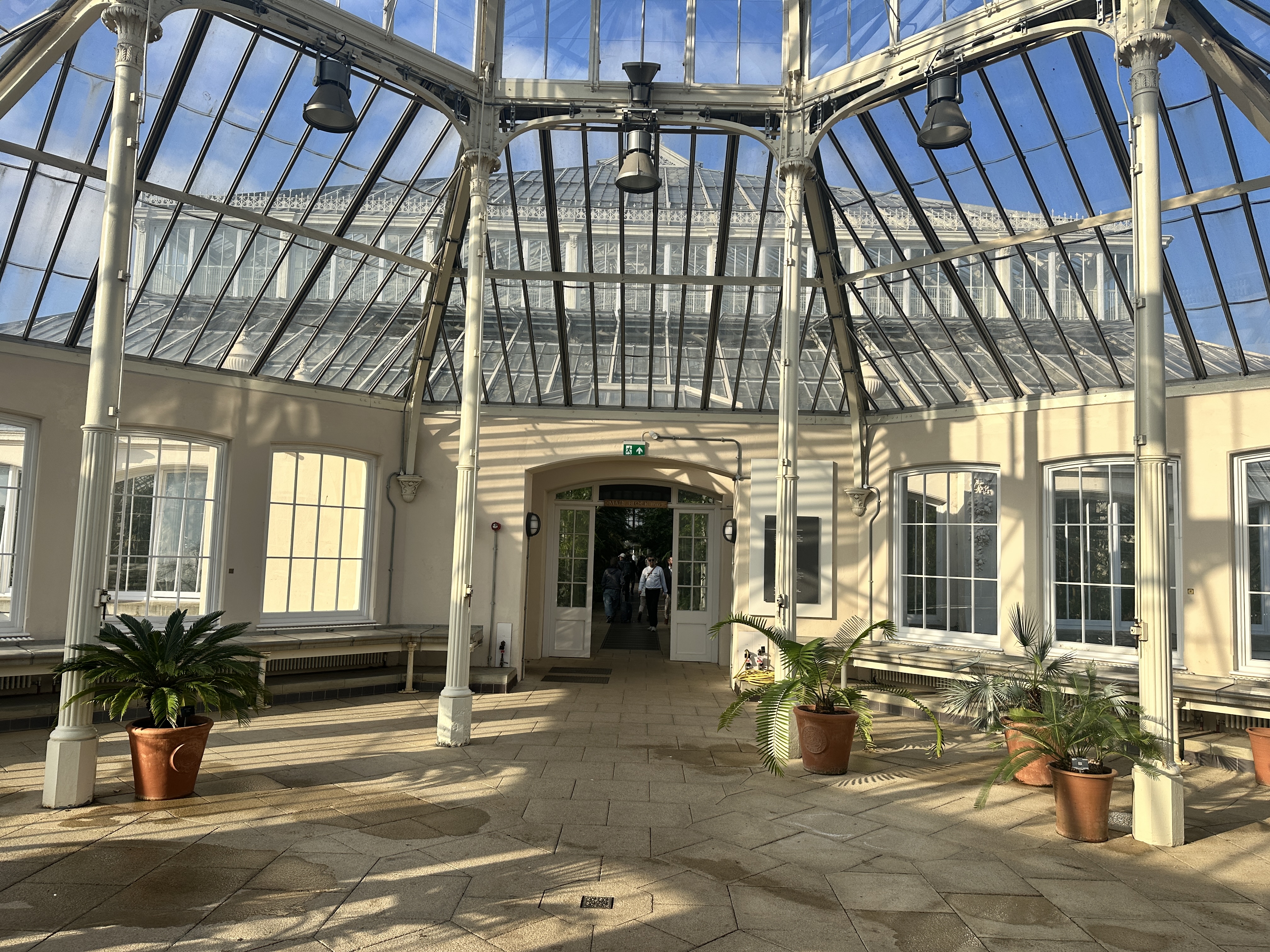
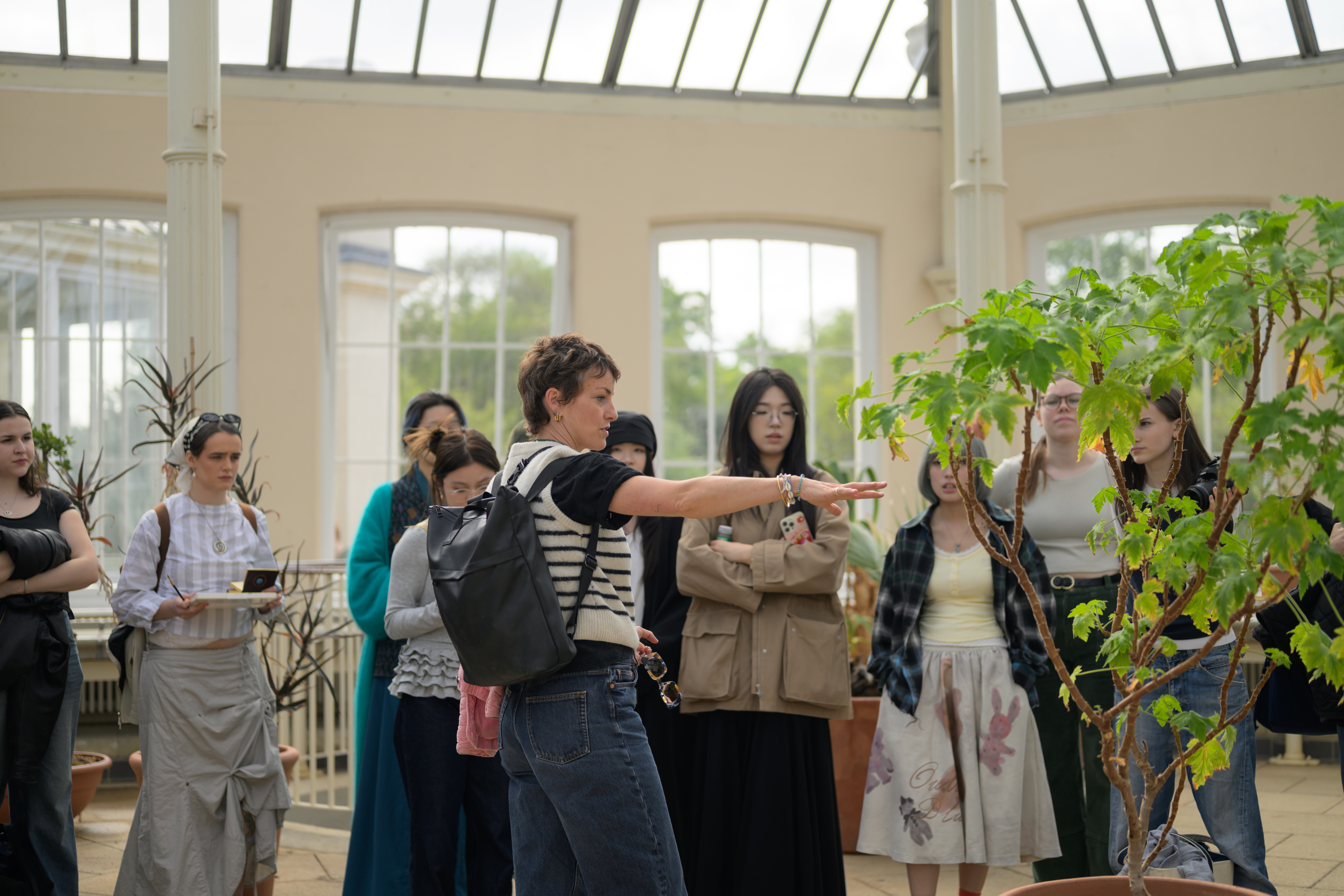
As part of their autumn 2025 show Material World, Kew Gardens commissioned Lottie Delamain Studio to design a garden for the Temperate House that celebrated the storied global history of plants and textiles.
Using contemporary motifs that are all too familiar to us today, the garden emerged out of planted islands of ‘textile waste’, reaching up to a series of full-height textile installations to reveal the beauty to be found in botanical colour.
Each island represented a continent, featuring dye and fibre plants from that region, including one ‘hyper-local’ island which contained plants foraged locally by natural dye educator Kate Turnbull, with the Youth Forum.
Using contemporary motifs that are all too familiar to us today, the garden emerged out of planted islands of ‘textile waste’, reaching up to a series of full-height textile installations to reveal the beauty to be found in botanical colour.
Each island represented a continent, featuring dye and fibre plants from that region, including one ‘hyper-local’ island which contained plants foraged locally by natural dye educator Kate Turnbull, with the Youth Forum.


Plants and textiles share an interwoven and complex history deeply impacted by the devastating consequences of the global fast fashion industry

Lottie worked in collaboration with the BA Textile students at Chelsea College of Arts, to design the textiles which hung above each bed, five large scale art-works to showcase the beauty of plant based colour and how they could be used in a contemporary textile industry.
The garden islands were designed to be walked amongst, for an immersive experience, and were ‘dressed’ in waste textiles donated by Traid, creating stylised mounds of waste, designed to prompt a conversation about how we could do more with the resources we have around us, and the ‘waste’ we discard.
The plants, a global garden of dye and fiber plants from around the world, have been grown and supplied by Kelways in Somerset.
The garden islands were designed to be walked amongst, for an immersive experience, and were ‘dressed’ in waste textiles donated by Traid, creating stylised mounds of waste, designed to prompt a conversation about how we could do more with the resources we have around us, and the ‘waste’ we discard.
The plants, a global garden of dye and fiber plants from around the world, have been grown and supplied by Kelways in Somerset.
Sketches, reference images and stages ︎︎︎


studio@lottiedelamain.com
+44 (0)7393 989 059

Copyright © Lottie Delamain Design Ltd. — Company No: 16204793
